
The main cost drivers
| Factor | Lower cost | Higher cost |
|---|---|---|
| Power | Existing power at the location | New electrical service, trenching or boring, or a solar system |
| Connectivity | Existing internet in an amenity building | Cellular service or wireless links between buildings |
| Number of locations | Cameras grouped at one amenity | Cameras spread across entrances, parks and ponds |
| Camera type | General overview cameras | License plate recognition, long-range or panoramic cameras |
| Recording | Short retention on one recorder | Long retention, cloud recording or both |
| Mounting | Existing buildings and poles | New poles and foundations |
| Add-ons | Cameras only | Live video monitoring, access control, health monitoring plans |
One-time vs. ongoing costs
- One-time: equipment, installation, electrical work, poles and the training session.
- Ongoing, if chosen: cellular service for remote sites, cloud recording, live video monitoring, health monitoring and maintenance plans, and cloud access control service.
Ways boards keep cost down
- Start with the entrance and the pool, where most incidents happen, and add parks and ponds in a later budget year.
- Use existing power and internet wherever it’s safe to.
- Choose retention to match the board’s policy instead of the maximum.
- Plan the system so future cameras plug into the same recorder and network.
Getting a real number
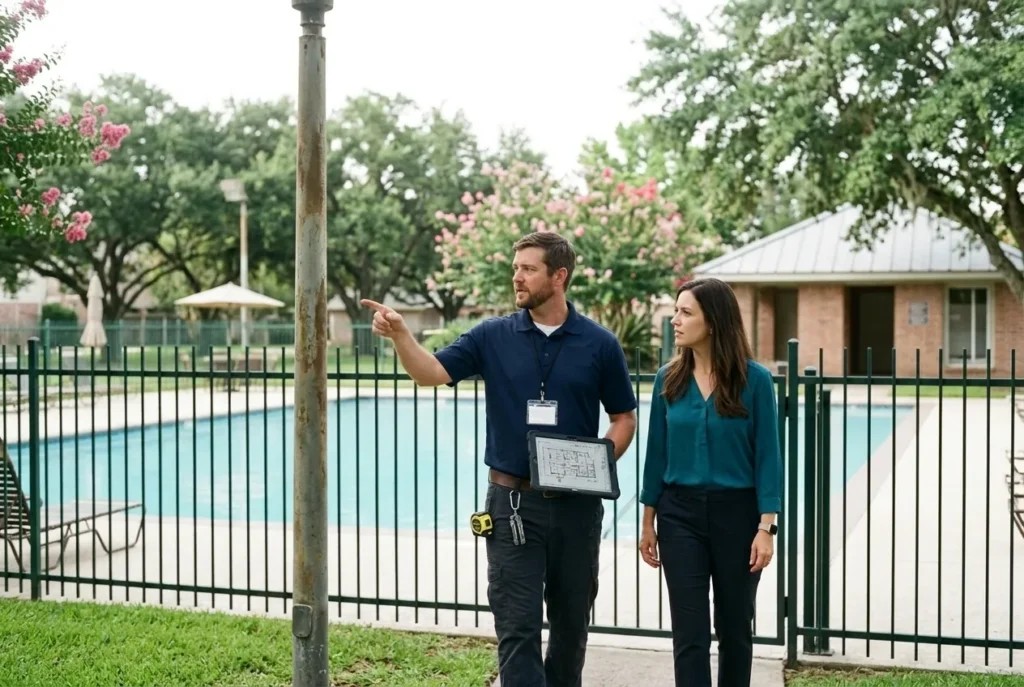
The free on-site assessment is how we price a system accurately. We walk each location, check power and connectivity, and send a written proposal the board can compare and vote on.